
Haidar Saify
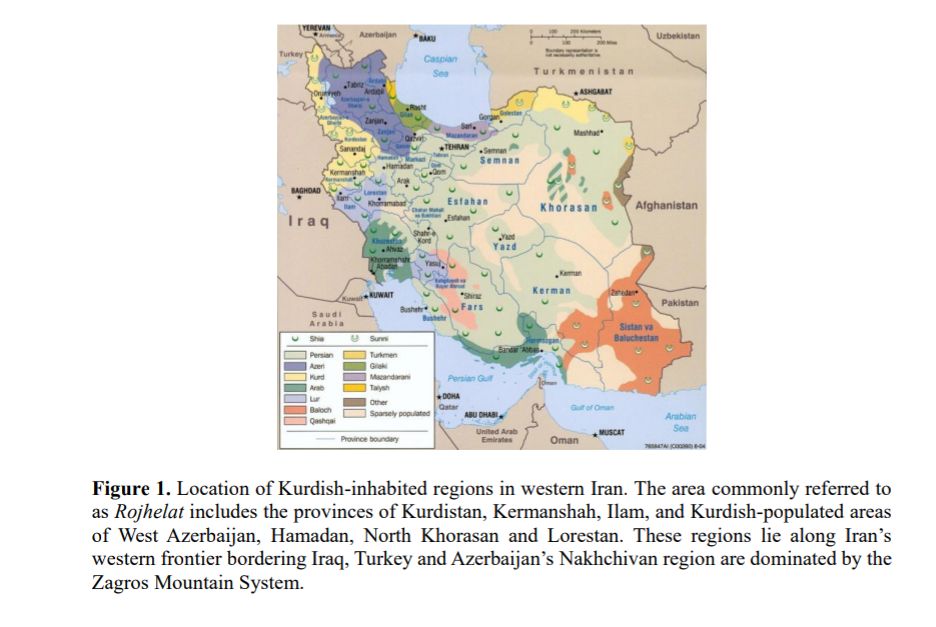 Rojhelat
This study examines the political, economic, geographic, and cultural dynamics of the Kurdish regions of Iran, commonly referred to in Kurdish discourse as Rojhelat (Eastern Kurdistan). Located along Iran’s western frontier and dominated by the Zagros Mountain System, the region occupies a strategically significant position bordering Iraq, Turkey, and Azerbaijan’s Nakhchivan region. The study explores how geography, historical developments, demographic diversity, and state policies have shaped the contemporary conditions of Kurdish communities in Iran. It analyzes key dimensions including political mobilization, economic development, natural resources, education, cultural life, and regional geopolitics. While Rojhelat possesses significant environmental resources, strategic trade corridors, and growing educational institutions, it continues to face structural challenges such as uneven development and tensions surrounding cultural and political representation. The article examines the historical roots of Kurdish political movements, from tribal autonomy and early nationalist movements to contemporary political coalitions, and situates them within Iran’s broader national framework. By integrating geographical, historical, and socio-political perspectives, the study highlights the region’s dual role as both a peripheral frontier and a critical geopolitical corridor. In conclusion, the future stability and prosperity of Rojhelat will depend on balanced approaches to regional development, political inclusion, and cultural recognition within Iran’s multiethnic society.
Keywords: Rojhelat, Eastern Kurdistan, Iran
1. Introduction
The Kurdish regions of Iran—often referred to by Kurdish political discourse as Rojhelat or Eastern Kurdistan—constitute one of the four major Kurdish-populated regions of the Middle East, alongside those in Turkey, Iraq, and Syria (McDowall, 2004; Entessar, 2010). These regions span several western Iranian provinces including Kurdistan, Kermanshah, and Ilam, as well as parts of West Azerbaijan, Hamadan, North Khorasan, and Lorestan.
Kurds constitute approximately 10–17% of Iran’s population, making them the country’s third-largest ethnic group after Persians and Azeris (Minority Rights Group International, 2023). Rojhelat occupies an important place in Iran’s political geography due to its strategic location along the borders with Iraq, Turkey, and Azerbaijan’s Nakhchivan region, as well as its position within the Zagros mountain corridor, which has historically shaped patterns of settlement, security, and political interaction. The region has long served as a center of Kurdish political mobilization and contains considerable cultural and linguistic diversity (Romano, 2006). However, despite these geographical and social advantages, it has faced persistent political tensions and developmental disparities that Kurdish activists and scholars often attribute to centralized governance structures and restrictions on cultural autonomy.
This article explores Rojhelat’s contemporary condition across geography, politics, economics, culture, education, and development, highlighting the tensions between regional identity and national integration.