
By Attorney Ahmed Abdul Rahim and Dr. Akram Naasan

To the Western reader who today hears calls urging “the peoples of Iran to seize the opportunity and claim their rights,” these phrases may appear to be a natural part of political discourse in times of war.
For the Kurds, however, such words are not new. We have heard them before, and paid for them with our blood, our cities, and our mountains.
The issue is not a rejection of freedom. It is a rejection of repeated betrayal.
1975: When a Revolution Fell on the Table of Interests
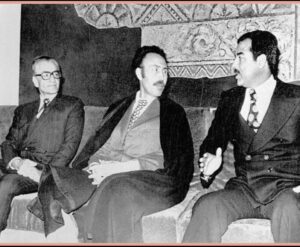
In the 1970s, Mullah Mustafa Barzani led a major Kurdish revolution, supported by indications of regional and international backing. Yet in 1975, with the signing of the Algiers Agreement between Iraq and Iran, strategic calculations shifted. U.S. policy at the time, shaped in part by Henry Kissinger, prioritized balance-of-power considerations over sustained support.
Within days, the revolution collapsed. It was not defeated on the battlefield but in international negotiations.
That was the first major lesson: undocumented support can evaporate in an instant.
1991: A Call Without Commitment
During the Gulf War, U.S. President George H. W. Bush called upon the Iraqi people to rise against the dictator.
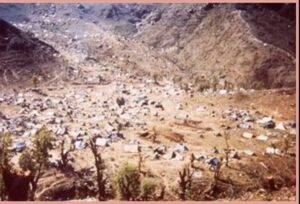
The Kurds and the Shiites responded. But there was no direct commitment to protect them when the machinery of repression began.
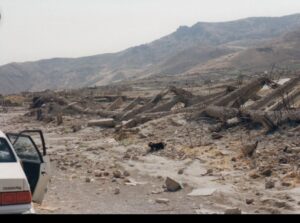
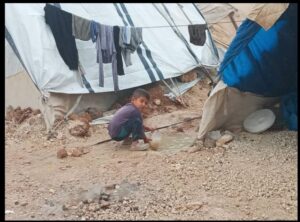
The result was a humanitarian catastrophe. Millions of Kurds fled toward the Turkish and Iranian borders. The mountains became collective shelters.
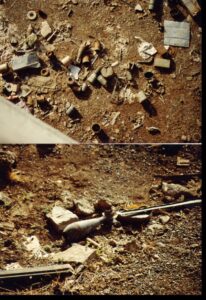
The international community later intervened by imposing a no-fly zone, mbut only after betrayal had already occurred.
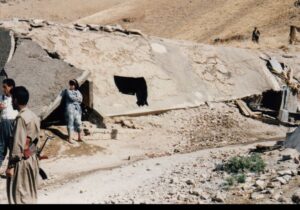
The difference between rhetoric and guarantee was the difference between life and displacement.
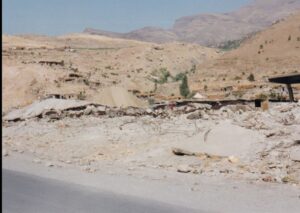
2017: The Will of a People, and International Isolation
In 2017, 93.7 percent of the people of the Kurdistan Region voted in favor of independence. It was a clear democratic exercise.
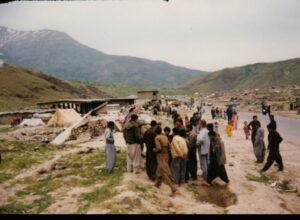
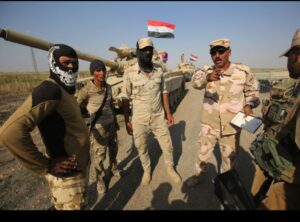
Yet Turkey and Iran closed their borders, and Baghdad moved militarily toward Kirkuk, including with American-made Abrams tanks. There was no international protection for the outcome of the referendum.
Once again, the error was not in demanding a right, but in assuming that international silence meant neutrality.
Rojava: Partnership in War, Shifts in Politics
In Rojava, more than 100,000 Kurdish men and women fought within the international coalition against terrorism. Over 30,000 Kurdish fighters were martyred in battles against ISIS.
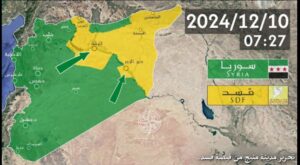
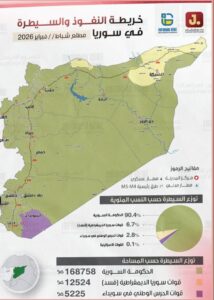
Yet in 2025–2026, with political shifts on the ground, U.S. positions changed, and control maps were altered.
This was not a theoretical experience. It was one written in blood and sacrifice. And when interests shift, the local fighter pays first.
2026: New Rhetoric, Old Memory
Today, amid war between Israel and the United States on one side and Iran on the other, calls are once again directed at the peoples of Iran to “seize the opportunity.” U.S. President Donald Trump urges the exploitation of a historic moment.
But the Kurds do not hear words alone.
They hear the echo of 1991.
They see the shadow of 1975.
They remember 2017 and Rojava.
The question is not whether peoples have the right to freedom. That right is constant.
The question is:
Is there a binding commitment?
Is there a guarantee of protection?
Is there a strategic alliance, or merely a temporary convergence of interests?
We Are Not Foot Soldiers on Someone Else’s Battlefield
The Kurds are not infantry for an army fighting a battle whose decision they do not control.
The aircraft that bomb are not our air force. The war unfolding is not our national project.
We do not need phone promises. Nor do we need passing tactical positions.
We need a clear strategic alliance, a commitment written before action, not sympathy expressed after catastrophe.
Qasimlo’s Question, Still Relevant
When Professor Abdul Rahman Qasimlo was asked to take major steps within the context of the Iran, Iraq War, his response was fundamental:
What is the guarantee?
Will you fight with me for Kurdistan?
The question was not weakness. It reflected a deep understanding that states are not built on emotional moments, but on a network of legal and political protection.
Betrayal Is Not Destiny، It Is a Miscalculation
1975 was a political betrayal.
1991 was a military and humanitarian betrayal.
2017 was a diplomatic betrayal.
Rojava was the betrayal of an incomplete partnership.
In 2026, the Kurds cannot accept another betrayal.
Those who seek genuine partnership with the Kurds must speak the language of long-term strategic alliance not the language of a passing “opportunity.”
We do not reject freedom.
We do not fear change.
But we have learned that rhetoric alone does not protect a people, and that in politics, memory is more important than enthusiasm.
The mountains are still there.
But we do not wish to return to them.
We seek a partnership founded upon explicit commitment, so that the dream of freedom does not once again become betrayal.